Despite the anticipation for sluggish growth into the first part of 2011, Fannie Mae, in their November 2010 Economic Outlook, sees GDP growth driven by consumer spending as well as improvements in most sectors of the mortgage market. Additionally, the report calls for a recovery in homebuilding next year in addition to demand for purchase loans, but gradually rising interest rates are seen weighing on refinance demand.
Fannie Mae is under no illusions about the challenges facing the economy in the short term, however. "The performance for the current quarter is likely to be more of the same tepid growth we saw during the third quarter. Furthermore, they note that even though headline growth appears to be stabilizing or improving, that much of that growth came from an accumulation in inventories which suggests less new production to meet demand. As evidence of this, they point to the disparity between headline growth and Final Sales saying "the deceleration in final sales underscores the fragile underlying trend in economic activity"

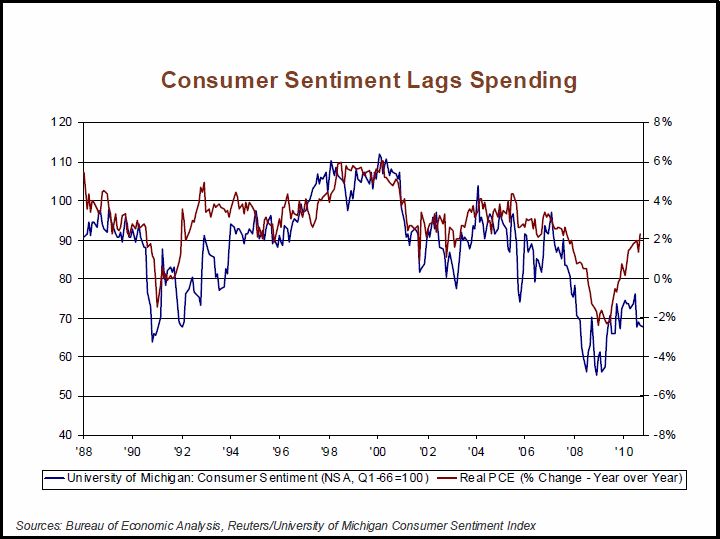
The main driver of economic improvement, they say, will be consumer spending as determined largely by labor market conditions and income trends. Rather than rely on a decrease in unemployment, which they agree will remain stubbornly high in coming years, labor market health has improved due to rising average hourly earnings and the lengthening of the average workweek. But there are no guarantees of an ongoing positive effect as can be seen by looking at October's consumer spending (chart below). With mitigating data such as this in mind, Fannie's forecasts call for only a moderate 0.2% per year growth in personal consumption expenditures in 2011 and 2012 respectively.

The report alludes to the uncertainty of improvements in consumer spending by noting that while spending has increases, consumer sentiment has not kept pace. This would not be abnormal with respect to past cycles where spending has historically led sentiment, however, effectively justifying their predictions for slight improvements.
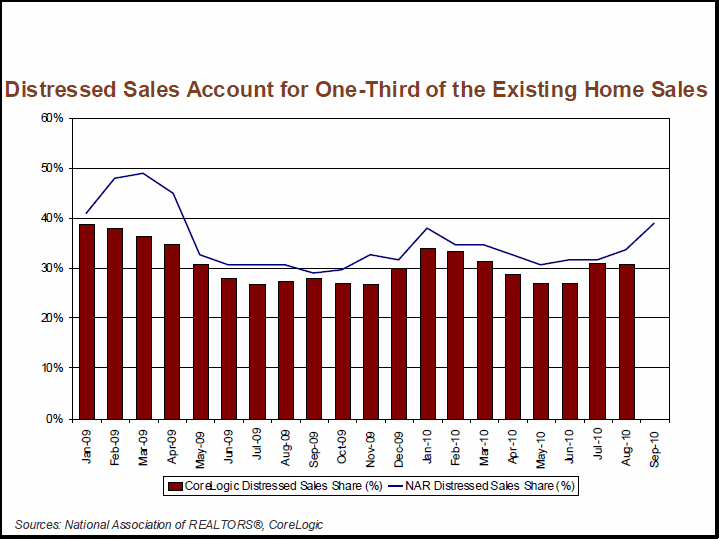
As far as housing, Fannie Mae's near term outlook remains understandably bearish. "Although both existing and new home sales rose in September, total home sales likely will soften in coming months. Existing home sales jumped 10% in September but the impressive gain did not yet reflect the suspensions of some foreclosure sales." There is a lot of slack to pick up as far as home sales are concerned with distressed sales currently accounting for about a third of all sales.
"While the housing market still suggers from a large amount of excess supply for housing, it appears that conditions are slowly improving," says the Census Bureau's Housing Cavancy Survey. Fannie economists note that although the current homeowner vacancy rate is quite high by historical standards, it has at least moved down from record highs at the end of 2008.
Other silver linings for the housing market include an increase in housing starts, new home sales, home prices and purchase business. The following chart contains a full breakdown of Fannie Mae's Housing-Related forecast.