The Mortgage Bankers Association (MBA) today released its Weekly Mortgage Applications Survey for the week ending March 25, 2011.
The MBA's loan application survey covers over 50% of all U.S. residential mortgage loan applications taken by mortgage bankers, commercial banks, and thrifts. The data gives economists a snapshot view of consumer demand for mortgage loans. In a falling mortgage rate environment, a trend of increasing refinance applications implies consumers are seeking out lower monthly payments. If consumers are able to reduce their monthly mortgage payment and increase disposable income through refinancing, it can be a positive for the economy as a whole (may boost consumer spending. Also allows debtors to pay down personal liabilities faster). A trend of declining purchase applications implies home buyer demand is shrinking.
Excerpts from the Release...
The Market Composite Index, a measure of mortgage loan application volume, Mortgage applications decreased 7.5 percent on a seasonally adjusted basis from one week earlier. On an unadjusted basis, the Index decreased 7.2 percent compared with the previous week.
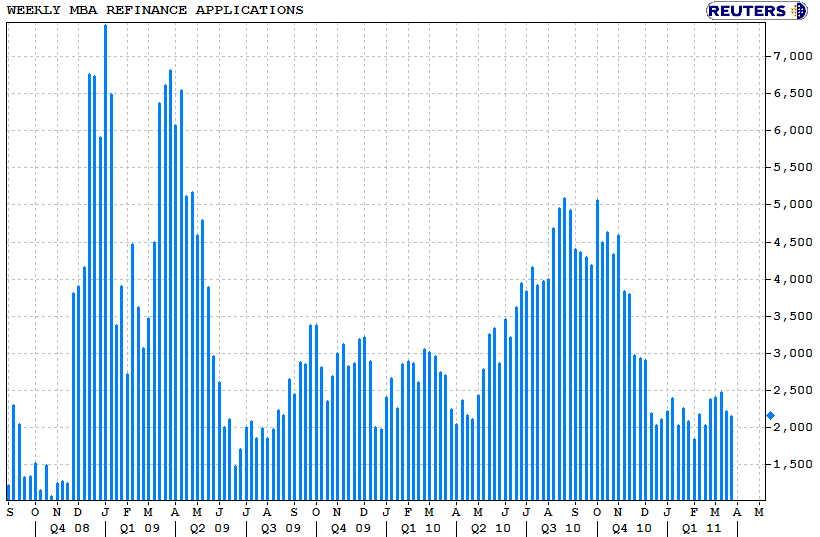
The Refinance Index decreased 10.1 percent from the previous week. The four week moving average is up 2.0 percent. The refinance share of mortgage activity decreased to 64.3 percent of total applications from 66.4 percent the previous week. This is the second lowest refinance share reported since May 2010.
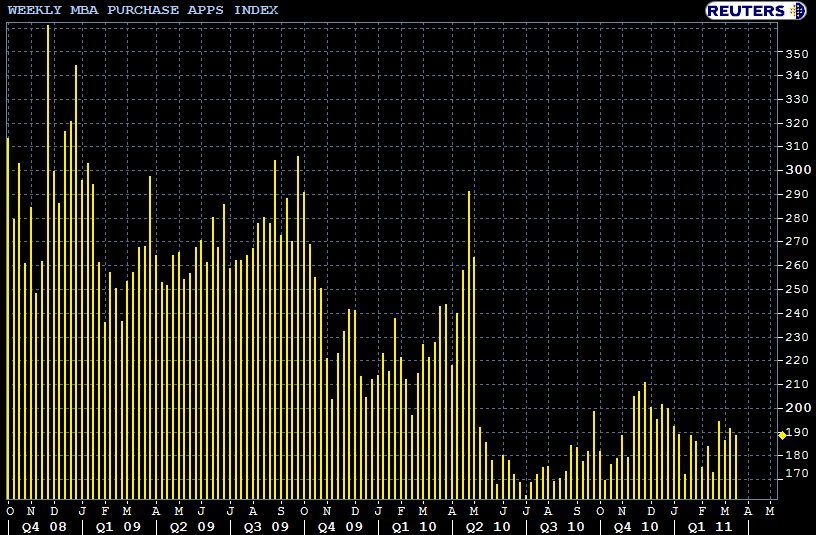
The seasonally adjusted Purchase Index decreased 1.7 percent from one week earlier. The unadjusted Purchase Index decreased 1.5 percent compared with the previous week and was 21.9 percent lower than the same week one year ago. The four week moving average is up 2.1 percent.
The average contract interest rate for 30-year fixed-rate mortgages increased to 4.92 percent from 4.80 percent, with points decreasing to 0.83 from 0.96 (including the origination fee) for 80 percent loan-to-value (LTV) ratio loans. The effective rate also increased from last week.
The average contract interest rate for 15-year fixed-rate mortgages increased to 4.16 percent from 4.02 percent, with points increasing to 0.99 from 0.90 (including the origination fee) for 80 percent LTV loans. The effective rate also increased from last week.
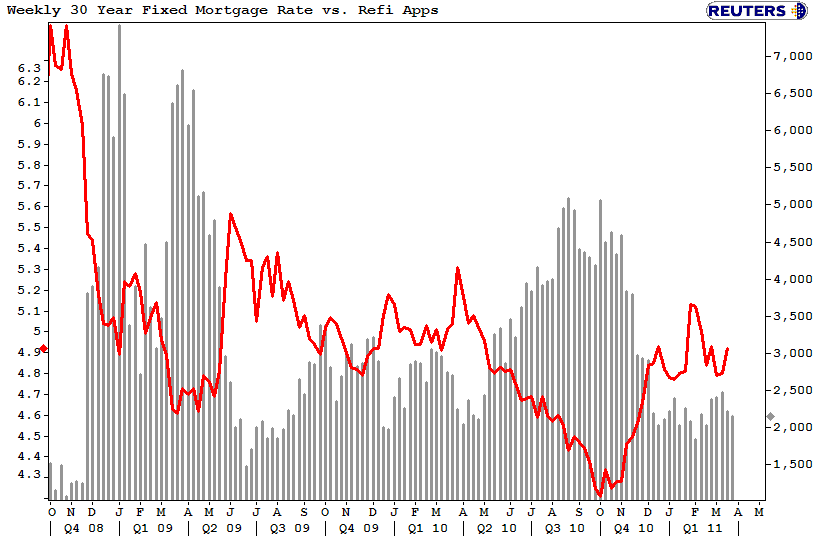
"Treasury and mortgage rates increased towards the end of last week, as global markets calmed following the recent crises in Japan and the Middle East," said Michael Fratantoni from MBA. "Refinance volume predictably fell in response to these rate increases. As rates climb back to 5%, fewer homeowners have both the incentive and the ability to refinance."
MND's Adam Quinones had this to say last week...
"Recently lower mortgage rates have done little to motivate potential refinance candidates." said MND's Managing Editor Adam Quinones. "This isn't a big surprise as most qualified borrowers simply don't have an incentive to refinance because they already did last year when rates were near record lows. Other than that, qualification issues continue to prevent many folks from lowering their monthly payment. We do however expect a modest increase in purchase activity heading into the spring buying season."
Today he adds, "It certaintly seems like the folks who missed out on a refinance in November are the only borrowers remaining who are eligible for a rate reduction. Unfortunately we'll need to see 30-year mortgage rates in the 4.25% area before a significant uptick in refinance activity is observed. Otherwise originators should be building their purchase business."